Retro Track Player: A Bold Design for Business Branding
First Impressions: Vibrant, Playful, and Visually Striking
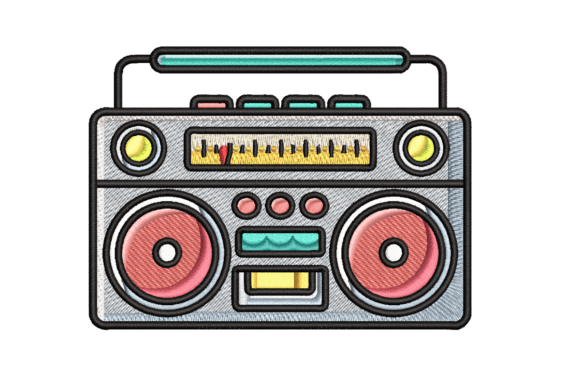
The Retro Track Player embroidery design immediately captures attention with its energetic, neon-accented boombox graphic. As a professional embroidery designer, my first thought is that this design leans heavily into a playful, nostalgic aesthetic that feels both bold and modern with a retro twist. It’s not overly formal, which makes it perfect for small businesses looking to project a fun, youthful, or creative brand identity.
Whether you're running a boutique, a vinyl shop, or a vintage-inspired café, this design has the visual punch to stand out. The large speakers and tuner display suggest movement and sound, making it a great conversation starter on merchandise or uniforms.
Real-World Business Use: From Patches to Product Packaging
Let’s talk practicality. The Retro Track Player embroidery design is versatile enough to work across a variety of business merchandise applications. Here’s how it holds up in different use cases:
- Embroidered patches – The bold outlines and minimal internal detail make this design ideal for patches. It’s clean enough to read at a glance, and the retro boombox graphic gives a branded patch a unique edge.
- Staff uniforms – On the chest or sleeve of a uniform, this design adds a touch of personality without looking unprofessional. Especially for creative studios or music-themed venues, it reinforces brand culture.
- Apron embroidery – For bakeries or cafés with a retro vibe, this design can be stitched onto aprons to create a cohesive, branded look.
- Cap embroidery – This is where caution comes in. While the design is bold and eye-catching, the level of detail may get lost on a curved cap front. It’s best suited for larger hoop areas or side panels where the full graphic can be appreciated.
- Tote bag design – Perfect for boutique merchandise or event giveaways. The size and clarity of the boombox graphic make it ideal for tote bags where visibility and brand recognition are key.
- Product packaging accents – If your small business sells handmade goods, adding a small embroidered patch with this design can elevate packaging and create a memorable unboxing experience.
Where to Use It Carefully: Size, Fabric, and Detail Matter
While the Retro Track Player embroidery file is visually strong, it’s not without limitations. As a designer, I always consider the following when recommending it to clients:
- Small patch sizes – The finer details of the tuner display and speaker mesh may not translate well at sizes below 2 inches. Always test at intended size before mass production.
- Cap fronts and curved surfaces – Due to the linear and angular nature of the boombox, distortion can occur on curved surfaces. Consider simplifying or resizing the design for better results.
- Textured or dark fabrics – This design relies on contrast. On dark uniforms or textured materials like twill or canvas, thread color selection becomes critical. Always test on sample fabric.
- High stitch density – If the file is dense, it may not be suitable for soft or stretchy fabrics. Watch for puckering or stiffness in the finished product.
- Frequent washing – For businesses that require durable, washable items like aprons or work shirts, ensure the design is digitized with durability in mind and that proper stabilizer is used.
Brand Identity and Customer Engagement: More Than Just a Design
When used thoughtfully, the Retro Track Player machine embroidery design can become a powerful part of your brand identity. It communicates a sense of fun, nostalgia, and creativity—perfect for Etsy sellers, craft businesses, or local shops looking to differentiate themselves.
From a customer trust standpoint, a well-executed embroidered design like this adds a level of professionalism and permanence to your merchandise. It signals that you’ve invested in quality and detail, which can elevate perceived product value.
For visual consistency, be sure to pair this design with complementary fonts and color schemes in your other branding materials. If you’re using it across multiple items—like tote bags, caps, and staff uniforms—ensure the design scales well and maintains its clarity across all applications.
Practical Notes for Embroidery Designers and Merch Creators
Before using the Retro Track Player digital embroidery file in a commercial embroidery project, here are some essential checks and steps to follow:
- Test in black and white first – This helps identify contrast issues and ensures the design remains legible without color cues.
- Check small patch size performance – Resize the file to the intended patch dimensions and stitch it out on a sample hoop to confirm clarity.
- Review thread color contrast – Choose thread shades that highlight the boombox’s structure and avoid blending into the fabric background.
- Inspect spacing and density – Ensure there’s enough space between elements to avoid a muddy appearance when stitched.
- Confirm hoop size and fabric compatibility – Match the design to your machine’s hoop capacity and test on the actual fabric to be used.
- Use proper stabilizer – Especially for textured or stretchy materials, the right stabilizer makes a big difference in the final outcome.
- Create a mockup for client approval – A printable mockup helps clients visualize the design on the final product before production begins.
- Compare with other design assets – Make sure this design fits within your broader brand aesthetic and can coexist with other logos or graphics.
- Confirm commercial licensing – Always verify that the Retro Track Player embroidery file includes the appropriate license for business use, especially for resale or branded merchandise.
Final Thoughts: A Dynamic Addition to Your Design Toolkit
The Retro Track Player embroidery design is more than just a nostalgic throwback—it’s a versatile, brand-building tool for small businesses and creative entrepreneurs. Whether you’re creating custom apparel, boutique merchandise, or embroidered product labels, this design has the potential to enhance your brand’s visual appeal and customer engagement.
As with any embroidery file, success lies in understanding your materials, testing thoroughly, and considering the end-use. When applied thoughtfully, this design can become a signature element of your brand identity—bold, memorable, and uniquely yours.