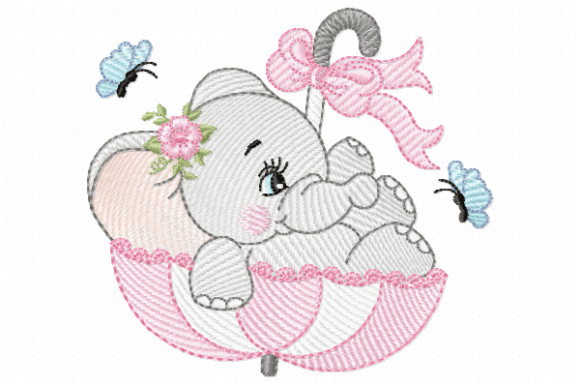
Elephant in the Umbrella
First Impressions: Playful, Sweet, and Versatile
As an experienced embroidery designer, the first thing that stands out about Elephant in the Umbrella is its whimsical charm and soft visual appeal. The concept of a cute elephant nestled inside a pink umbrella immediately evokes a sense of playfulness and warmth—perfect for businesses that want to project a friendly, approachable brand identity. While it’s categorized under Baby Animals, this machine embroidery design has a broader appeal that can extend beyond baby showers and nursery decor.
It reads as a handmade product with a modern twist, ideal for small businesses looking to add a touch of personality to their merchandise without sacrificing professionalism. It’s not overly bold or rustic, but rather a gentle, elegant accent that can work well across a range of branded items.
Real Business Use: From Patches to Product Packaging
When evaluating Elephant in the Umbrella for commercial use, I immediately considered how it would translate across various small business merch applications. Here’s how it performs:
- Embroidered patches – The design’s clean outlines and soft curves make it excellent for patch production. It holds up well in mid-sized patches and maintains its charm without losing detail.
- Staff uniforms & aprons – As a chest or sleeve accent, this design adds a subtle, branded touch that’s appropriate for boutique cafés, local bakeries, or children’s clothing brands. It brings personality without overwhelming the garment.
- Cap embroidery – On the front of a cap, it reads clearly and adds a whimsical flair. However, it’s important to test at smaller sizes to ensure clarity, especially in the umbrella’s details.
- Tote bags & aprons – This design works beautifully on tote bags and aprons, especially when used as a secondary branding element. It pairs well with text-based logos or minimalist branding.
- Product packaging accents – For handmade brands or Etsy sellers, this embroidery file can be stitched onto small fabric tags or pouches to elevate product presentation.
- Customer gifts & event merch – It’s a perfect fit for limited edition giveaways or seasonal promotions, especially for businesses with a playful or nurturing brand voice.
- Digital mockups & design assets – When creating printable mockups, the design integrates smoothly into branding kits, especially when paired with soft color palettes and clean typography.
Where to Use It Carefully
While Elephant in the Umbrella is versatile, there are some practical limitations to consider before mass production:
- Small patch sizes – The umbrella’s details may get lost if scaled down too small. Test it at 2 inches or less to ensure clarity.
- Cap fronts – Curved surfaces can distort fine lines, so a test stitch on a cap blank is essential.
- Dark uniforms – The pink umbrella may not pop as well on black or navy garments. Consider thread color adjustments for better contrast.
- High stitch density – If the original digital embroidery file has heavy fill stitches, it could cause stiffness on soft fabrics like baby onesies or lightweight tote material.
- Textured fabric – Avoid using this on highly napped or uneven fabrics unless you adjust the stabilizer and tension settings accordingly.
- Frequent washing – If used on staff uniforms or aprons, ensure the stitch density is balanced for durability without compromising comfort.
Brand Identity Impact: Soft, Memorable, and Trustworthy
From a branding perspective, Elephant in the Umbrella helps small businesses create a warm, memorable visual identity. It’s particularly effective for brands that want to emphasize care, creativity, and approachability.
Used consistently across custom apparel, patches, and packaging, it reinforces visual consistency and strengthens customer trust. It adds product value by signaling attention to detail and craftsmanship—especially important for Etsy sellers and handmade brands.
While it may not be suitable for formal or luxury branding, it’s ideal for businesses in the children’s market, pet brands, local boutiques, and creative studios. It subtly communicates that your finished product is thoughtfully made, not mass-produced.
Designer Notes: Practical Tips Before Production
Before using Elephant in the Umbrella in a commercial setting, here are key steps every embroidery designer should take:
- Test in black and white first – This helps identify clarity and contrast issues before committing to color threads.
- Check small patch size performance – Ensure all elements remain visible and readable when scaled down.
- Review thread color contrast – Especially for the pink umbrella against different fabric backgrounds.
- Inspect spacing and outlines – Look for gaps or overlapping stitches that could affect the final look.
- Confirm hoop size – Make sure the design fits within your machine’s hoop size limitations.
- Test on real fabric – Always stitch a sample on the intended material to check for tension and texture issues.
- Use proper stabilizer – Lightweight tear-away or cut-away stabilizers work best for soft fabrics.
- Create a mockup for client approval – Use printable mockups to show how the design will look in context before production.
- Compare with other design assets – Ensure it complements your existing design assets for cohesive branding.
- Confirm commercial licensing – Check that the embroidery file includes rights for commercial use, especially for small business merch and product designers.
Final Thoughts: A Thoughtful Design for the Right Brand
Elephant in the Umbrella isn’t just a decorative embroidery design—it’s a strategic branding tool for small businesses that want to stand out with a soft, memorable identity. Whether used as a branded patch, a chest accent on uniforms, or a sweet touch on customer gifts, this design has the potential to elevate your handmade product line or boutique merchandise.
Just be mindful of its limitations in small sizes and on dark or textured fabrics. With proper testing and thoughtful placement, Elephant in the Umbrella can become a signature element of your brand’s visual language—whimsical, professional, and uniquely yours.